24” x 16”
Acrylic, Gel Pen, Glitter, Ground Coffee, Paper, Plastic on Stretched Canvas
2025
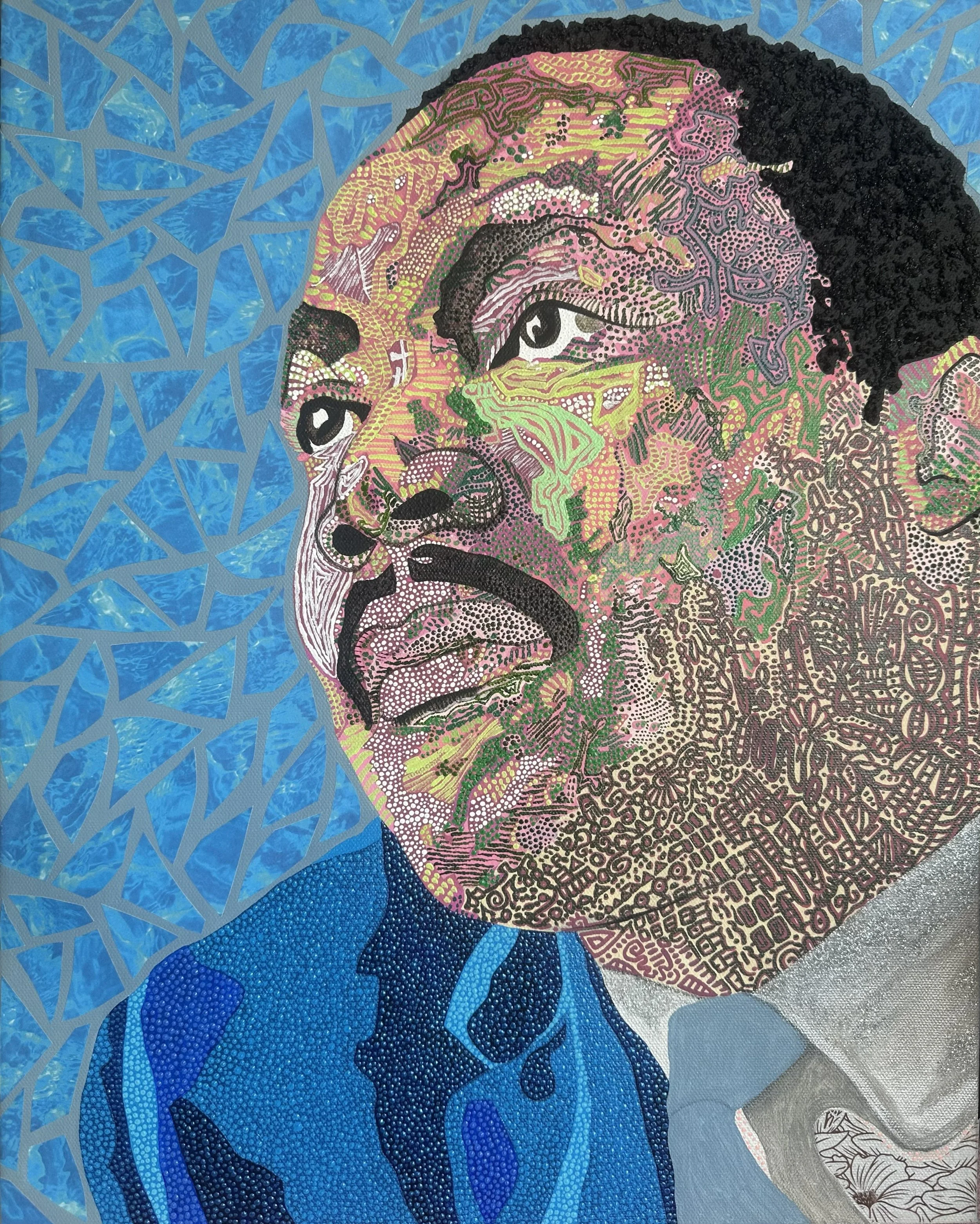
This mixed‑media portrait of Dr. Martin Luther King Jr. was created in collaboration between Ashley Joi Summers and her daughter, Kali Joi. Rendered with acrylic paint, gel pen, glitter, ground coffee, paper, and plastic on stretched canvas, the piece blossoms with layered textures that echo both the depth of King’s message and the shared hands that shaped it. Ashley sketched and painted the foundation of Dr. King’s face, while Kali contributed her own mark‑making, bringing youthful spontaneity and energy to the work. Together, they built the surrounding elements, allowing the portrait to grow organically through dialogue, trust, and creative exchange.
The collaboration itself becomes part of the artwork’s meaning. In the process, Ashley found it challenging to release control and allow Kali to paint on her work. This is a tension that mirrors the vulnerability required when people come together across differences, generations, or perspectives. Yet the final piece stands as a testament to what can emerge when we choose connection over control. In this way, Martin’s Flowers becomes both a portrait and a practice: a living reflection of Dr. King’s dream that we learn to create, build, and bloom together.
24” x 16”
Acrylic, Gel Pen, Glitter, Ground Coffee, Paper, Plastic on Stretched Canvas
2025
This mixed‑media portrait of Dr. Martin Luther King Jr. was created in collaboration between Ashley Joi Summers and her daughter, Kali Joi. Rendered with acrylic paint, gel pen, glitter, ground coffee, paper, and plastic on stretched canvas, the piece blossoms with layered textures that echo both the depth of King’s message and the shared hands that shaped it. Ashley sketched and painted the foundation of Dr. King’s face, while Kali contributed her own mark‑making, bringing youthful spontaneity and energy to the work. Together, they built the surrounding elements, allowing the portrait to grow organically through dialogue, trust, and creative exchange.
The collaboration itself becomes part of the artwork’s meaning. In the process, Ashley found it challenging to release control and allow Kali to paint on her work. This is a tension that mirrors the vulnerability required when people come together across differences, generations, or perspectives. Yet the final piece stands as a testament to what can emerge when we choose connection over control. In this way, Martin’s Flowers becomes both a portrait and a practice: a living reflection of Dr. King’s dream that we learn to create, build, and bloom together.