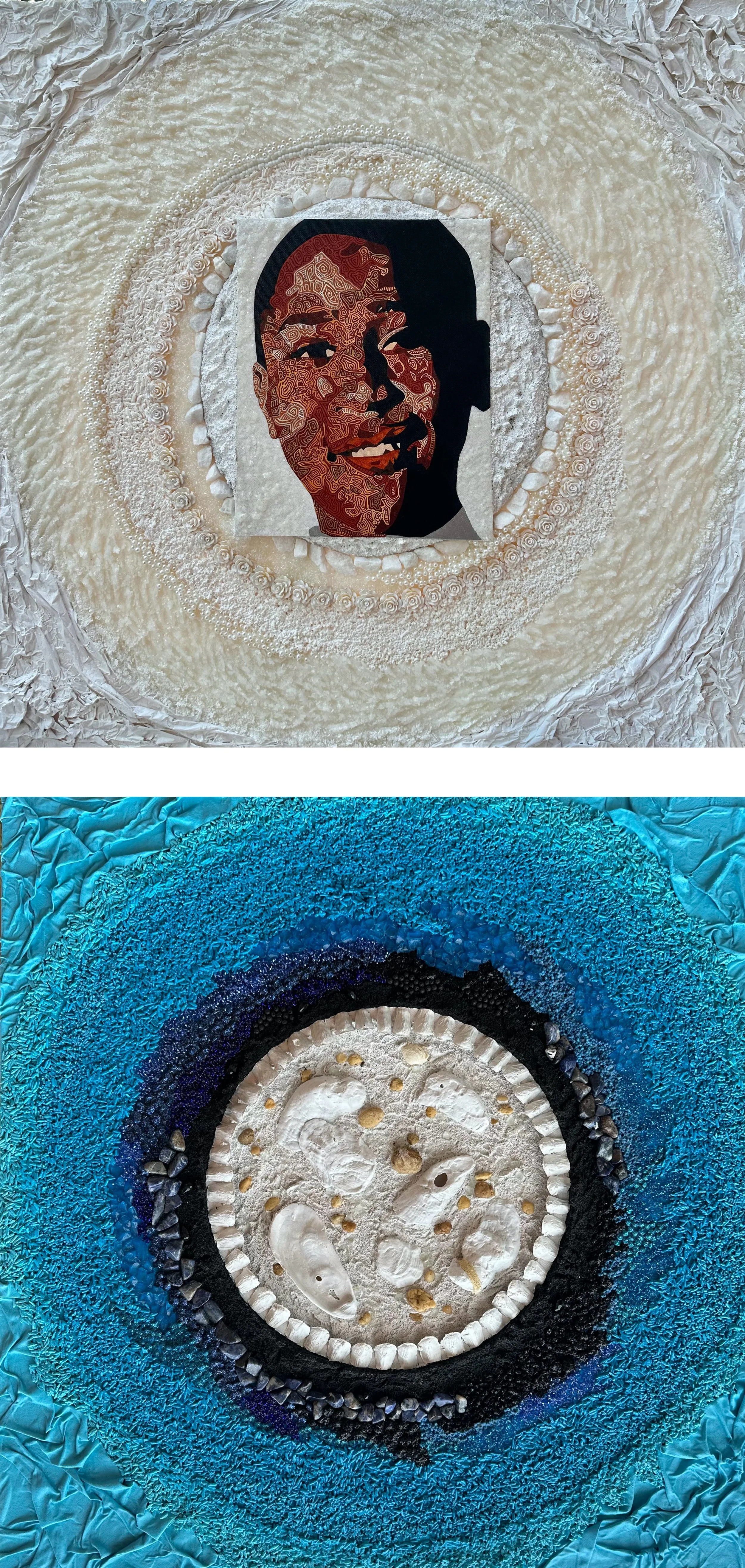
36” x 36” Diptych
Acrylic, Rice, Glitter, Beads, Glass, Gel Pen, Fabric, Yarn, Shells from Lewes Beach (Delaware),
Sand and Rocks from Sandy Point Beach Park (Maryland), Deconstructed Pine Cones from Hanes Point at East Potomac Park (Washington, D.C.) on Stretched Canvas
2025
The upper canvas serves as a memorial, echoing the solemnity of an altar or funeral setting. Layers of rice, fabric, and repurposed grocery bags form a halo-like design around Emmett’s portrait, symbolizing both nourishment and scarcity. The use of rice and found materials reflects ancestral resilience, transforming limited resources into cultural richness, and speaks to a legacy of making beauty from what remains. Many materials were collected alongside the artist’s daughter, who is close in age to Emmett at the time of his death, forging an intergenerational dialogue of memory and loss.
The lower canvas, dominated by shades of blue and black, represents the site of violence and its aftermath. The circular form evokes the metal fan used to weigh down his body, while deconstructed pinecones, tied shells, and pierced seashells reference the tools and symbols of his final moments—the string binding him to the fan, the whistle he was accused of blowing, the chewing gum purchased that day. The deep blues and blacks echo the physical and emotional trauma, contrasting with the natural materials such as sand, rocks, and shells gathered from shorelines as a nod to his return to the earth.
Together, the two canvases suggest a spiritual journey: from the violence of his death below to a transcendent peace above. This work stands as both remembrance and reverence as a meditation on injustice, resilience, and the sacredness of life.
36” x 36” Diptych
Acrylic, Rice, Glitter, Beads, Glass, Gel Pen, Fabric, Yarn, Shells from Lewes Beach (Delaware),
Sand and Rocks from Sandy Point Beach Park (Maryland), Deconstructed Pine Cones from Hanes Point at East Potomac Park (Washington, D.C.) on Stretched Canvas
2025
The upper canvas serves as a memorial, echoing the solemnity of an altar or funeral setting. Layers of rice, fabric, and repurposed grocery bags form a halo-like design around Emmett’s portrait, symbolizing both nourishment and scarcity. The use of rice and found materials reflects ancestral resilience, transforming limited resources into cultural richness, and speaks to a legacy of making beauty from what remains. Many materials were collected alongside the artist’s daughter, who is close in age to Emmett at the time of his death, forging an intergenerational dialogue of memory and loss.
The lower canvas, dominated by shades of blue and black, represents the site of violence and its aftermath. The circular form evokes the metal fan used to weigh down his body, while deconstructed pinecones, tied shells, and pierced seashells reference the tools and symbols of his final moments—the string binding him to the fan, the whistle he was accused of blowing, the chewing gum purchased that day. The deep blues and blacks echo the physical and emotional trauma, contrasting with the natural materials such as sand, rocks, and shells gathered from shorelines as a nod to his return to the earth.
Together, the two canvases suggest a spiritual journey: from the violence of his death below to a transcendent peace above. This work stands as both remembrance and reverence as a meditation on injustice, resilience, and the sacredness of life.